Medi-Cal spends $608M monthly on cooking, cleaning home services, even for illegal immigrants
National News

Audio By Carbonatix
8:00 AM on Monday, February 2
Kenneth Schrupp
(The Center Square) – Medi-Cal is paying an estimated $608 million per month for cooking, shopping, cleaning, and laundry services for elderly and disabled low-income California residents – including illegal immigrants – at their homes and mostly paid to their relatives, state records show.
These services are part of a federally-and-state-funded program called In-Home Supportive Services, which was designed to get people assistance at home without having to move to an expensive facility. But the program has grown so rapidly that it is responsible for 41% of job gains in California since January 2019, when Gov. Gavin Newsom took office.
By the end of 2025, the program had grown to 799,379 taxpayer-funded “providers,” making IHSS “provider," according to federal occupational data, the most common job in the state.
Gov. Gavin Newsom’s office responded by accusing The Center Square of having “California Derangement Syndrome" after the news organization asked about the dominance of IHSS in California employment, citing federal statistics.
Newsom spokesperson Tara Gallegos also questioned the cited numbers.
“We don’t respond to fairy tale statistics,” she wrote in an email to The Center Square. “We’re sorry that your California Derangement Syndrome has led you down this sad path.”
Four minutes before Gallegos’ response, California’s Employment Development Department released its own report on the state’s net loss of 11,200 nonfarm payroll jobs in 2025, which would have been over seven times worse if not for IHSS growth.
The governor’s office did not respond to a follow-up with the state’s own figures.
The majority of IHSS providers are relatives of and live with recipients, and are paid an average of $18.33 per hour. The average recipient is authorized for 118.4 hours per month, thus earning the average provider an estimated $2,170.27 per month.
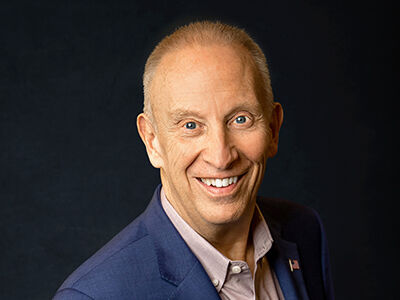
“We see a growth in government jobs, and dramatic decrease in private sector jobs in California, and that is very alarming and unsustainable,” said Assemblyman Carl DeMaio, R-San Diego, in an interview with The Center Square. “Not only are these not good jobs, they are literally a conduit of funding for political campaigns for the politicians that have established them.”
Since January 2019, government jobs, and taxpayer-funded jobs in healthcare and education grew by 852,400 jobs, while all other industries combined lost a net 139,300 payroll jobs. During this time, the U.S. Census estimates state’s population also declined by 156,914 residents.
As DeMaio noted, IHSS members are unionized, under SEIU Local 2015. Another SEIU healthcare union, SEIU-UHW, recently introduced a ballot measure to institute a wealth tax on California billionaires.
For the ongoing fiscal year, the state budget allocated $3.3 million for California to “support IHSS collective bargaining and its potential transition to state level collective bargaining,” suggesting changes in compensation for IHSS providers may be coming soon. This means provider wages could rise to match the state’s $25 per hour healthcare minimum wage, which would increase base labor costs for the program by 36%.
To receive paid in-home care through IHSS, a recipient is supposed visited by a social worker to establish the maximum number of allowable billable hours. There are also supposed to be scheduled visits to review the need for services.
IHSS breaks these services into two categories: domestic and related services, and personal care services.
Combined monthly billing for both domestic and personal services provided through the program is an estimated $1.6 billion per month for 85 million hours of work. IHSS is projected to cost $29.9 billion in the ongoing fiscal year, an 11.9% increase over the prior year — reflecting the program’s compounding costs.
In December, the average IHSS provider was authorized to provide 45.9 hours of care across the domestic and related services category, though not all services are utilized by each recipient (use rates range from 80.5% through 83.5%). These include domestic services — such as cleaning — buying food, preparing and cleaning after meals, laundry, and other shopping and errands.
Food-related domestic services represent a combined 35.7 hours of authorized work per recipient each month, reflected in 25.7 million hours of billable work across the IHSS workforce. At the typical IHSS wage, that’s $472 million per month on just those food-related services — domestic services, laundry, and other shopping and errands cost another $136 million per month.
Personal care includes a much wider array of services, and wider variance in usage, ranging from menstrual care (4.4% of recipients) to dressing (88.8% of recipients). Billing hours for personal care added up to 51.9 million hours per month at a taxpayer-funded cost of $951 million per month.
During last year's budget cycle for the ongoing fiscal year, a proposal to eliminate IHSS coverage for illegal immigrants was ultimately not adopted. The state did adopt a freeze on new illegal immigrant enrollment in Medi-Cal for adults over 19 years old starting in January 2026.
While there is a long-standing rule technically barring illegal immigrants from serving as IHSS providers, illegal immigrants already enrolled in Medi-Cal are still able to secure IHSS-funded care.