Testosterone screening for 2M troops comes with no cost estimate
National News

Audio By Carbonatix
6:49 AM on Saturday, September 19
Brett Rowland
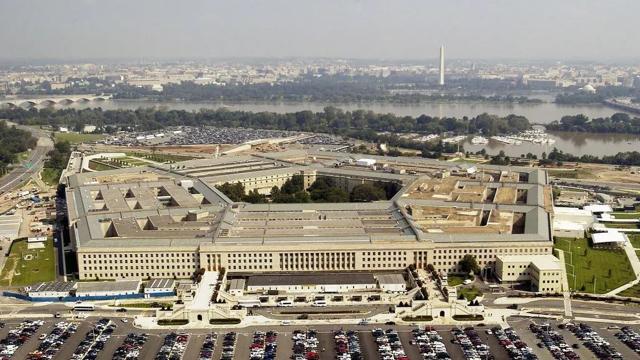
(The Center Square) – The Pentagon is ordering testosterone screening for some 2 million troops without saying what it will cost, and its own clinical guidance says it does not know how many service members it will test or treat.
The screening applies to every active-duty and reserve service member age 30 and older, a population of about 2 million. But the guidance the Defense Health Agency issued this week says the numbers to be screened, tested, diagnosed and treated "are not currently known," and no prior guidance projected them.
The department has not said what any of this will cost. The Center Square asked for a cost estimate in July, when the mandate was announced, and again this week. The Defense Health Agency, which issued the guidance, declined to answer questions about it and referred them to the Pentagon press office, which did not respond to a request for comment this week and did not provide a cost estimate in July. Neither the July memo nor the clinical guidance carries a price tag, or says whether the screening and any resulting treatment will be funded through the existing Military Health System budget or a new request.
The department has framed the program as a readiness measure. Secretary of War Pete Hegseth's July 15 memo ordering the screening said that "applying lessons learned from treating Operator Syndrome across the Total Force including targeted testosterone therapy directly optimizes Warfighter readiness," and Chief Pentagon Spokesman Sean Parnell said in a Sept. 17 statement that the effort would help sustain "a healthy, capable, and decisively dominant fighting force."
The guidance issued under that memo does not support using testosterone to boost performance in healthy troops. It states that testosterone "is not a performance enhancer" and that "guidance premised on performance enhancement rather than on treatment of a diagnosed deficiency is not supportable on the current evidence." The guidance treats testosterone deficiency as a diagnosis to be confirmed and treated, not a fitness edge to be issued across the force.
Dr. Richard Auchus, an endocrinologist at the University of Michigan, told The Center Square the guidance is "largely evidence-based," screening for symptoms before ordering blood tests, an approach "consistent with society guidelines and good clinical practice." He said he was "relieved" the document was "not recommending broadly blood-test based screening everyone over 30."
The guidance also differs from how the program has been described. In July, a Pentagon official told The Center Square that "everyone over 30 years old will be tested annually." But the guidance does not call for testing everyone. It directs providers to screen with a symptom and risk-factor questionnaire and to order a blood test only when that screen is positive or a risk factor is present.
The program's clinical premise traces to "Operator Syndrome," a term coined in 2020 by psychologist Chris Frueh to describe a cluster of health problems, including brain injury, sleep disruption and hormonal dysfunction, in special operations forces. Hegseth's memo cited it as justification for testing across the force. Frueh, who reviewed the new guidance, told The Center Square it was "very good."
The guidance is candid about the limits of what testosterone does. It says the therapy helps sexual function, body composition and bone density, but that the evidence "does not support its use to improve energy, vitality, physical function, or cognition." It notes that the American College of Physicians recommends against prescribing it for those reasons, and that in a major trial, testosterone did no better than a placebo at improving men's energy or how far they could walk.
The House Armed Services Committee's majority and minority offices did not immediately respond to questions Friday about whether they received a cost estimate for the program.